
RM: Only Human
The full chapter on RM from the book 'BTS by ARMY: 2020' edited by Wallea Eaglehawk

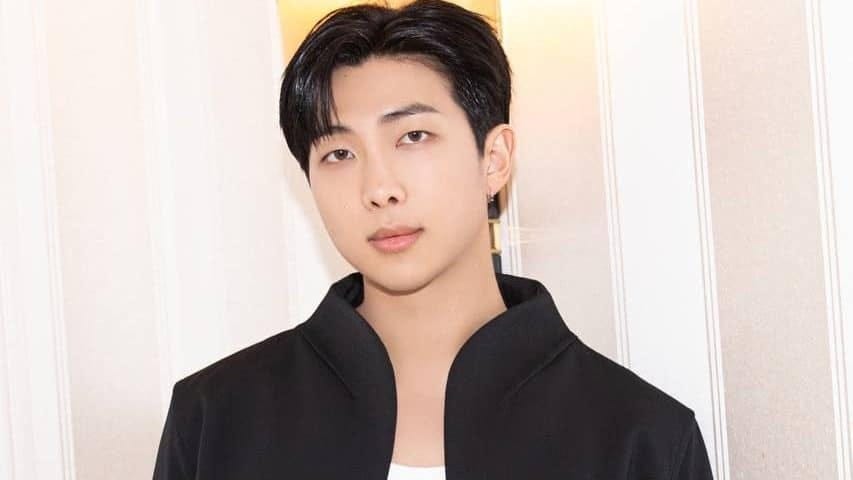
Genesis: I’m a 27-year-old Korean. That’s what I think1
In RM’s 2015 mixtape, aptly titled RM, he penned “I’ve diligently walked like this for seven years, and now the path gets cleared up for me”.2 These words were true to him as an individual five years ago. But now as he stands on stage at Dick Clark’s New Year’s Rockin’ Eve counting down to 2020, they seem more relevant than ever. With a new year now upon him it felt as if RM’s future was unbearably bright, surrounded by the technicoloured landscape of New York’s Time Square and his beloved BTS members. It was like the path had been cleared for him once again to shine, and fly.
Kim Namjoon, Namjoon, otherwise known as RM, was born September 12, 1994 in Seoul, South Korea. 2020 marked his tenth year with Big Hit Entertainment, and the seventh as leader of BTS. This passage of time is what he reflected on for his New Year’s message:
“I first entered Big Hit in April of 2010. I’ve spent an entire decade just for BTS. From when I was sixteen years old to now at twenty-six, I’ve spent it all on BTS. If I take away BTS, there is nothing left in my life. I will remember this decade as being the decade of BTS. Maybe that’s why I feel refreshed yet restless for 2020 because everything from start to finish is with BTS.”3
Refreshed yet restless, because despite achieving accolades and going from strength to strength as a member of BTS, and as a solo artist, it felt as though 2020 held the kind of infinite possibilities previously unattainable to him and the group. This was the same energy that was potent on New Year’s Eve — triumph, celebration, relief… an anticipation of what would come next.
RM is a rapper, lyricist and producer for and with BTS. Within the fandom and further afield, he is also known for his patronage of the arts,4 his rumoured IQ of 148,5 and his English language proficiency in overseas interviews.5
In 2020 RM was recognised as one of ten Patrons of the Arts by the Arts Council of Korea4 and became a full member of the Korea Music Copyright Association.6 Yet listing his accomplishments alone does not give a clear, nor appropriately nuanced, picture of the artist who leads one of the most influential music groups7 on the precipice of something big in 2020. This chapter aims to provide further depth to RM by juxtaposing an analysis of his creative work with his interviews, both which provide ruminations on his sense of self, with the experiences of the audience who watches on.
Through this analysis, a paradox will be explored, a contradiction, a complexity: being both Kim Namjoon and RM gives rise to a dualistic, or perhaps even multiplistic experience of identity and life as he negotiates being both idol and fan, artist and idol, revolutionary and human.8
Persona, who the hell am I?9
The question of who RM is, is a shared concern with the artist himself, who in his 2019 solo Intro: Persona (henceforth Persona) asked “persona, who the hell am I?”9 Though being released in 2019, Persona provides the first building block for this profile as it remains, to this day, one of RM’s most autobiographical works. Though on the surface, it may not reveal much about what he has done or where he has gone, it does provide a glimpse into the ruminations of an idol negotiating the complexity of contrasting needs and experiences.
““Who am I,” a question that I’ve been asking myself for my whole life
A question that I will probably never be able to find the right answer for
If I were answerable with only few words,
God wouldn’t have created all those many beauties.”9
Perhaps what can come as a surprise to many when first becoming acquainted with the work of RM is that there is a duality, a stark yet symbiotic contrast between the idol who commands the stage and the artist who asks who he truly is. Fan translator Doolset Bangtan notes that the “many beauties” RM mentions in Persona can be interpreted as the many “different “I”s, different personas”.10 Which can be taken as not only the many different personas of others around the world, but perhaps the many personas that exist within RM himself. Not only is RM saying he doesn’t quite know who he is, he is also acknowledging that there is perhaps more than one persona within him.
This is a full chapter excerpt from my edited book, BTS by ARMY: 2020. You can learn more about it here.
It is here that we can see the emergence of the complexity that lies within something more than just duplicity: multiplicity. As previously mentioned, RM appears to exist at the junction of many competing and contrasting identities, which he acknowledges in Persona with “the ‘me’ who I want to be / the ‘me’ who people want / the ‘me’ who I love / and the ‘me’ who I craft / the ‘me’ who’s smiling / the ‘me’ who’s crying sometimes / living and breathing every second, every moment, even now”.9
It’s no wonder, then, that the line that follows “persona, who the hell am I?”9 speaks not to who RM is, but perhaps reveals the true sentiment of the song: “I just wanna go, I just wanna fly”.9 Which, arguably, represents two things: RM’s desire to be moving forward, propelled by the frustration of constant ruminations on who he could be, and; his acknowledgement that it doesn’t matter who he is, because all he wants to do is be free and fulfil his own destiny.
One of RM’s most widely recognised roles is that of leader, within it comes a range of complexities and competing interests. “I think RM is a genuine leader,” says Suga at BTS’ birthday Festa in June 2020, “it’s not easy to make sure everything’s in place. It’s possible because he makes it possible.”11 RM as a genuine leader rarely, if ever, centres himself in the narrative, take this interview with Esquire, for example:
“Our company started with twenty to thirty people, but now we have a company with so many employees,” RM says. “We have our fans, and we have our music. So we have a lot of things that we have to be responsible for, to safeguard.” He considers it for a moment. “I think that’s what an adult is.”12
Through statements such as these, RM sets the tone for the rest of the group. Instead of centring himself by saying ‘I feel a great responsibility to my company and our fans, that’s what I think being an adult is’, he reframes it as a statement on behalf of BTS as a whole. Through this, we can see his professional integrity coming into play, he is a leader through inclusion. He is a leader for the betterment of BTS alone, and takes none of the spotlight for himself. But his leadership doesn’t stop there.
In an interview with Weverse, RM shares “I try to integrate myself into our generation, try to understand what people like me are thinking, and try to work hard to capture that feeling without being a burden on them.”1 Which gives further light to his professional and artistic integrity; he is someone who thinks deeply about those around him and tries his best to channel universal experiences through the group and outwards into the world. Not only is he a leader of BTS, but because of his unique role within the group, he is the leader of an entire ARMY.
Any chance he gets, he offers his positionality, “I think millennials are charging into society stuck between the analog and digital generations, and what I chose is BTS”,1 and reveals the responsibility he undertakes for representing his generation — and beyond — through and with BTS. Perhaps, then, being a leader is not a persona, as much as a character trait — one which can be consistently found throughout the personas he shares with the world. However, this is not done loudly, nor explicitly. He is leading by example, by first being the leader of his own life.
Interestingly, when asked to represent himself, he typically opts to take a smaller role within his own narrative. Such as not wanting to take too much credit for writing on the majority of tracks for 2020 release Map of the Soul: 7 during the behind-the-scenes look he presents with each album.13 Or simply making a joke, like when he was asked to leave a message for his future self during promotions for Map of the Soul: 7: “Have you finally got your driver’s license?”14
Juxtaposed against his role of leader are his experiences of loneliness, which give further context to who RM is. Examples of which can be found in his solo work, such as 2018’s mono. which was described by MTV as “equal parts wistful and weary [...] the theme of loneliness is constant throughout”.15 On Always, a single released on SoundCloud the same year as mono., he raps, “one morning, when I opened my eyes, I wished that I was dead / I wish someone killed me / In this loud silence, I live to understand the world, but the world has never understood me, why”.16 Though he is the leader of BTS, in some respects it appears he still feels on the periphery. In his Weverse interview he reflects on a quote from artist Whanki Kim:
““I’m Korean, and I can’t do anything not Korean. I can’t do anything apart from this, because I am an outsider.” And I keep thinking that way, too. That’s my main concern lately.”1
Perhaps this is why the lyrics from his mixtape “I’ve diligently walked like this for seven years, and now the path gets cleared up for me”2 have the same energy as “I just wanna go, I just wanna fly”,9 because after all this time, perhaps he is tired of ruminating and analysing, tired of asking why. Perhaps in 2020 with his group members sharing more and more of the responsibility typically shouldered by the leader — such as speaking English in overseas interviews and writing songs on BE — some of the pressure of growing is coming off and he now can spread his wings and fly, with all his personas in tow.
Irrespective of how Namjoon sees himself as both Namjoon and RM, it is clear through Persona that he is someone willing to critique and analyse himself as a means of artistic rigour and perhaps also emotional catharsis. His role as leader of BTS adds further meaning to this, as such a reflection on identity — along with his past work that sheds light on his loneliness — is honest and vulnerable. In this sense, his experience of loneliness has afforded him a unique perspective — like all distance does — and has, arguably, meant that he has taken extra care when working with others, and interacting with ARMY. It has meant that he surely must seek to understand those around him, and the world more broadly, in the same way he wishes to be understood. Presumably, such loneliness, in part, has shaped an empathetic and analytic man who has honed his creative voice to help people understand who he really is. Through this, he is enabling others to understand and communicate who they really are, too.
They say life is full of paradox17
This is the genesis of RM in the year of 2020. Genesis is a strange word, mostly because it has strong religious undertones. Such a comparison to a religious figure would surely not be how RM chooses to present himself, but it does play an important role in his story. When given the opportunity to speak about himself, RM, time and again, will present as someone humble and genuine. On his birthday he appeared on VLive to spend time with ARMY where he said “birthdays are… I try not to make a big deal out of it. I just call my mom and say thank you for giving birth [to me] and [for] raising me. I call mom and dad first.”18 Later on, he addressed a viral photo where it appeared his muscles were popping out of his shirt: “Everyone, I don’t have big muscles. Please know, I just try to work out hard.”18 And when concluding the session, he gave thanks for all his birthday wishes, saying that they were “more than I deserve, [they are] over my worth in destiny. Still, I appreciate all of this.”18 These three instances show RM as a laid back, hard-working artist with no desire to be aggrandised.
Another strange word is paradox, which typically refers to a self-contradictory statement. This was the word RM chose to use when he featured on Younha’s track Winter Flower which was released early January 2020. Perhaps what is more interesting is the context because in the line that precedes “they say life is full of paradox”,17 he says “I’m okay with whatever you call me”.17
What is of interest to this chapter is that there are many paradoxes, or contradictions, that exist within the identity and experiences of RM. One being that he does not wish to be regarded as a god or anything that places him above others, especially those within his own group. Yet, by all means, he is revered throughout the fandom and further afield as a genius,19 and a revolutionary.8 But if we are to take his lyric of “I’m okay with whatever you call me”17 into account, then perhaps he also is completely aware of the contradictions of his experience of self — someone who is just a regular human being — with his fans’ experience of him — the leader, the genius, the revolutionary.
If you were to take RM’s perspective of himself, he might say something like: I am the leader of BTS, I am an artist, I am human. However, if you were to take a fan’s perspective they could easily say: he is the leader of ARMY, he is our idol, he is revolutionary. Through the concepts of catharsis, metamorphosis, and antithesis these two paradoxical view points will be juxtaposed, and through a creative and analytical synthesis, they will merge to show an interpretation of who RM in 2020 was, in the words of an ARMY. After all, you can’t spell ARMY without RM.
“This might be another kind of irony itself, but this is who I am. I’m a 27-year-old Korean. That’s what I think.”1
Keep reading with a 7-day free trial
Subscribe to The BTS Theorist to keep reading this post and get 7 days of free access to the full post archives.